When Caroline and Ashley meet at fifteen, the difference between them seems obvious. Caroline is the girl everyone notices — striking, magnetic, impossible to look away from. Ashley is the one beside her: thoughtful, observant, and quietly aware that the world does not hand out its rewards evenly.
Over the decades that follow, their lives take very different shapes. There are marriages, disappointments, heartbreaks, work, reinvention, and the choices that slowly shape a life. Through all of it, their friendship remains the one place where each woman can be fully seen.
As the years pass, they begin to understand what the world rarely admits: beauty is not always the advantage it appears to be. What looks like privilege can become its own kind of confinement, while being overlooked can shape a person in ways no one else sees.
Their journeys become a deeper exploration of identity, friendship, and the quiet courage it takes to decide your worth for yourself.
My Beautiful Friend is a luminous novel about being seen and being overlooked, about the roles the world assigns women, and about the friendships that help us become who we are meant to be.
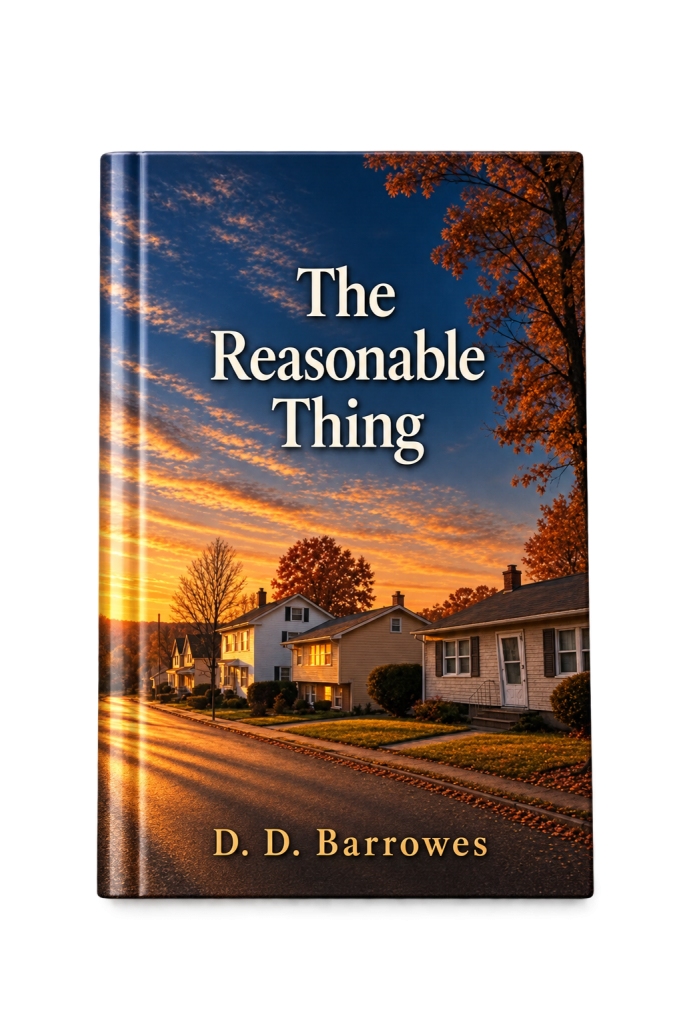
Meg Whitten writes love stories for a living — nine of them, under a name that isn’t hers. She knows exactly how those stories end: a broken woman, a patient man, and the promise of a life made whole. Her own story, however, is one she has spent fifteen years refusing to tell.
Then a woman is killed by the man she lived with in a small Maine town. The story appears in the newspaper, almost easy to miss. Everyone says the same things. He seemed so nice. No one knew. He must have snapped.
Meg knows better. Nothing snaps. It happens slowly — so slowly that sometimes no one inside the house can name the day everything changed.
She begins looking for the people who knew the woman who died, and then for other women whose lives have been shaped by fear, silence, control, and compromise. A woman who never had money of her own. A woman whose husband is the person you call when you need help. A friend who has carried a secret for thirty years.
Each one thought she was the only one. Each one was wrong.
And the deeper Meg goes, the harder it becomes to remain outside a story she has been living from the inside all along.
The Reasonable Thing is a quiet, unflinching novel about coercive control, the people who see and cannot speak, and the long road back to yourself. It is about the moment a woman stops asking, why did it take me so long? and begins to understand that she was never asking it alone.
Cuando Caroline y Ashley se conocen a los quince años, la diferencia entre ellas parece evidente. Caroline es la muchacha que atrae todas las miradas: llamativa, magnética, imposible de ignorar. Ashley permanece a su lado, atenta y observadora, consciente desde muy temprano de que el mundo no reparte sus recompensas por igual.
Con el paso de las décadas, sus vidas toman caminos muy distintos. Llegan el matrimonio, sus peligros y decepciones; el trabajo y la reinvención; las pérdidas que cambian para siempre la manera en que una persona se ve a sí misma. Y, a través de todo ello, su amistad permanece como el lugar donde cada una puede sentirse completamente vista.
Poco a poco, ambas descubren algo que el mundo rara vez admite: que la belleza no siempre es la ventaja que parece ser. Lo que atrae miradas también puede convertirse en una carga, mientras que ser ignorada puede dejar heridas que nadie ve.
Su historia se convierte así en una exploración íntima de la amistad, la identidad y de la fuerza que hace falta para decidir por una misma cuánto vale su propia vida.
Mi Bella Amiga es una novela sobre ser vista y ser pasada por alto, sobre los papeles que el mundo asigna a las mujeres y sobre la lealtad que puede sostenernos mientras aprendemos a definirnos por nuestros propios términos.
Some people make you feel less alone simply by being in the room. Michael Bancroft did it for twenty years — until, suddenly, he was gone.
He played churches before he played arenas. He carried the same battered guitar throughout his career and built a band around a simple belief: if one of them was struggling, the music would know. When he dies at the height of it all, ten thousand people gather to say goodbye.
Michael tells his story through the people who knew him best — his sister, his bandmates, the wife who shared both his music and his home. One by one, they finally say the things they could never quite say while he was alive. His father sits in the front row, carrying his own history with his son, and says nothing at all.
Then comes The Same Song — the story of what happens after the loss.
A widow tries to hold together a family and a band that no longer knows how to be four men minus one. Twin sons inherit different parts of their father’s legacy. Solomon finds himself drawn into the music, while Zacharias discovers an unexpected future in his grandfather’s world of numbers. Between them stands their mother, quietly refusing to let difference become distance.
Two stories unfold across one family — stories of love, grief, faith, memory, and the things even people who love each other most deeply struggle to say aloud.
Common Road brings together the complete novels Michael and The Same Song in one revised volume — two deeply human stories about the roads families travel together, and the ones they must sometimes learn to walk alone.
At sixteen, Chiara di Favarone hears a voice that will change the course of her life.
In Assisi, in the spring of 1210, she is the eldest daughter of a noble family still rebuilding after years of war and exile. Her future has already been decided for her. Marriage has been promised, her days carefully arranged, and her place in the world determined by the men who carry her family’s name.
Then a barefoot young man begins preaching in the square below the cathedral.
Something in his words reaches her — not rebellion, not certainty, but recognition. A pull toward a life she cannot yet explain and her family cannot imagine.
Two years later, on Palm Sunday, Chiara walks out of her father’s house in the darkness and does not return.
From there, Chiara tells the story of the woman history would come to know as Saint Clare of Assisi, not simply through the saint she became, but through the people who loved, challenged, followed, and lost her.
Her mother, Ortolana, carries her own history and the wisdom of a life lived with open hands. Her father, Favarone, loves his daughter deeply but cannot understand the choice that takes her from him. Her sister Catarina follows her into an unknown life. Francis brings a calling powerful enough to break open a family. And Chiara herself carries that calling from the spring morning when everything began to the final days of her life, forty-three years later.
Chiara is a luminous work of historical fiction about faith, family, freedom, and the difficult cost of accepting a calling while keeping faith with the promises we make.
Mara Ellis thought she had left it all behind — the company, the silence, and the culture that had learned to treat truth as something that could be managed.
Five years after a decision destroyed her career, she returns for what appears to be a routine consulting assignment. But the past is waiting for her.
Across the conference table sits Daniel Mabrey, the man connected to the decision that ended her career. Before Mara can understand why he is there, he gives her a warning:
You should never have come back.
What begins as an ordinary assignment soon becomes something far more dangerous. A new document known as the alignment clause appears polished and harmless, but hidden within its carefully constructed language is a distortion capable of changing the record — and erasing the truth.
Then the records begin to shift.
Files are rewritten. Information disappears. A system built to protect itself begins closing around Mara, forcing her to question what is real, who can be trusted, and how far the people behind it will go to keep the truth buried.
As the danger grows, Mara must decide whether to walk away again or confront the machinery that once took everything from her. And the person who may be able to help her is the one she expected never to trust.
The Alignment Clause is an emotionally charged novel of corporate intrigue and psychological suspense, exploring power, surveillance, manipulation, consequence, and the courage required to put the truth back on record.